
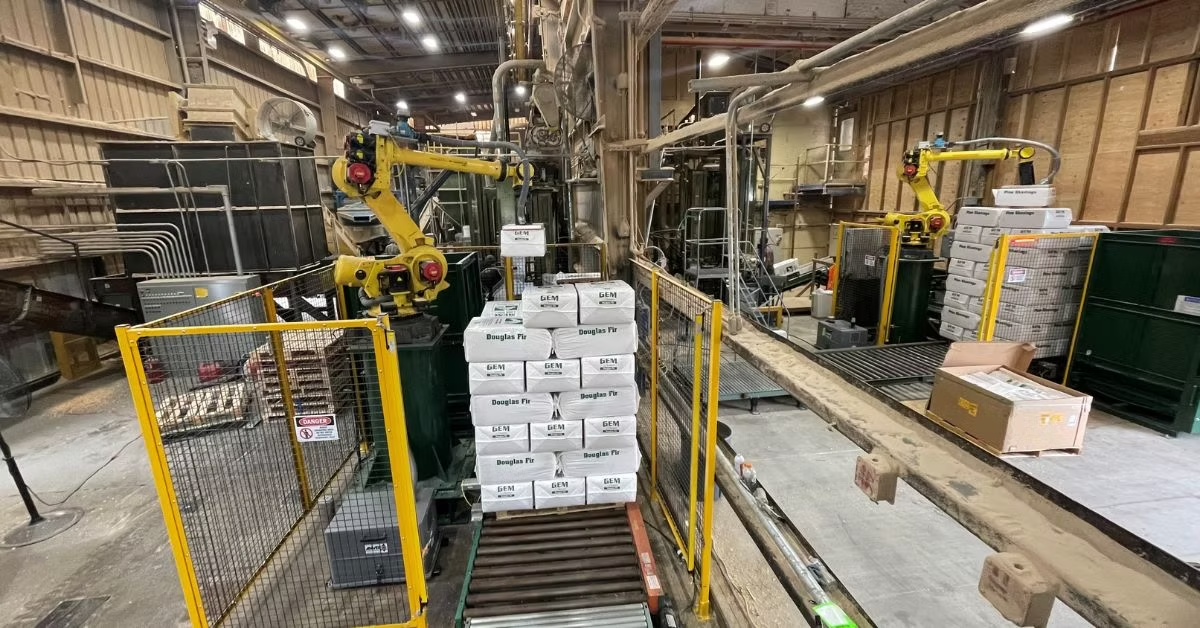
Many industrial workplaces are phasing out manual palletizing to make their operations more efficient and minimize labor costs. Strenuous, repetitive physical labor makes packaging and handling processes harder on employees, which is why there’s a rising demand for efficient, automated systems.
Understanding what automated palletizing is and how it works is important for business owners to make informed decisions for their workplaces. Let’s explore the basics of this system, how it can improve your operations, and what factors to consider when deciding if this technology is right for your facility.
What Is Automated Palletizing?
An automated palletizing system uses machinery and robotics to precisely arrange products onto pallets with little to no human intervention. It eliminates the need for manual stacking and allows programmed machines to handle various product types, sizes, and weights based on a series of input patterns.
Many palletizing systems use mechanical arms and robotic systems with vision sensors to remove products from conveyor lines and arrange them in programmed patterns. It’s a system that helps maintain stable, uniform pallets for storage or shipment.
How Automated Palletizing Systems Work
Automated systems work with a coordinated sequence of material handling, positioning, and placement commands that go into connected software. As products arrive at the palletizing station through conveyor systems or with material handling equipment, the hardware activates and starts sorting and stacking products onto pallets.
Sensors in the system help the software analyze the incoming products and figure out the best place to put them based on the product dimensions, weight, and any preprogrammed stacking information. These sensors make sure they properly position and orient products before placing them onto a pallet to prevent spills or mishaps from improper stacking.
Robotic arms or mechanical devices then lift products and position them precisely on the pallet according to the predetermined pattern. More advanced systems can use vacuum grippers, mechanical clamps, or other tools that work better for specific product types and industries. After the products on the pallet reach a weight or height limit, the system will move onto the next pallet to prevent over-stacking.
Types of Automated Palletizing Systems
Here are some of the most common types of automated palletizing systems:
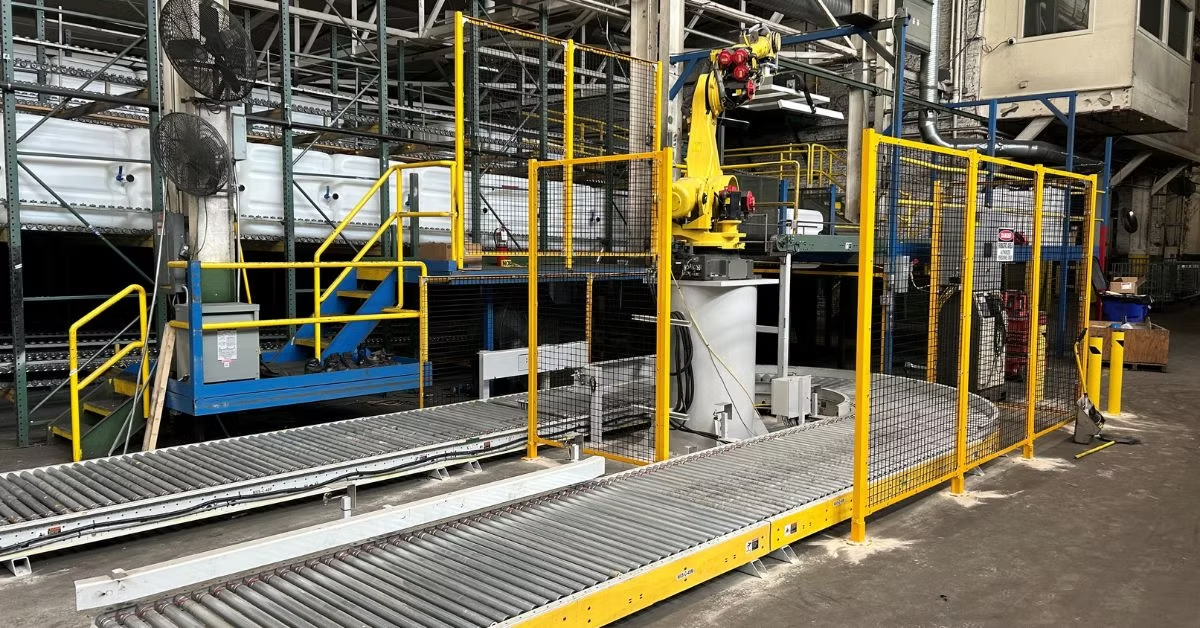
Robotic palletizers: These systems use articulated arms and can handle multiple tasks with varying degrees of precision and flexibility. They work for a range of product sizes, and it’s easy to swap between different stacking patterns through software changes.
Conventional palletizers: These models utilize a fixed mechanical system that works well for a consistent, stable application. While generally more affordable than other options, they offer limited flexibility and struggle to change stacking patterns.
High-level palletizers: These systems receive products from above and carefully lower them onto pallets down below. They’re a good option for facilities with limited floor space, but you need an adequate ceiling height that allows the system to move around and perform tasks.
Low-level palletizers: These systems operate on the floor and work best for facilities with height restrictions. Products arrive on the pallet level, and the system starts building upward.
Key Components of Automated Palletizing Systems
Now that you know what automated palletizing is and how it works, we can explore some of the key components of these systems. Programmable logic controllers or industrial computers run specialized palletizing software that manages product flow, stacking patterns, and integration with other facility systems.
Conveyor systems help transport products to the palletizing station and move completed pallets away from the work area. The palletizing equipment synchronizes with these systems to maintain smooth product flow and prevent components from blocking each other.
End-effectors represent the interface between the palletizing mechanism and your products. Vacuum systems work well for smooth, sealed packages, while mechanical grippers handle irregular shapes or porous materials. If your industry handles metal products or specialized tools, some automated palletizing systems may use magnetic grippers to maintain a superior hold.
Benefits of Implementing Automated Palletizing
One of the largest advantages of installing an automated palletizing system is that it helps improve workplace safety by reducing repetitive physical tasks from the manual workforce. Having robotic arms lift and stack heavy or cumbersome products greatly limits the physical strain that workers experience. Your employees can instead focus on higher-value tasks that require human judgment and problem-solving skills.
Another noteworthy benefit is consistency. Machines create uniform pallet loads with precise product placement, reducing damage during transportation and storage. This level of precision helps maintain optimal truck loading and makes the most out of available space inside trucks or warehouses.
Business can also save on labor costs by relying less on manual workers for palletizing tasks. While you’ll need operators to monitor and maintain the equipment, automated systems typically require fewer personnel than manual operations, especially during peak production periods.
Factors To Consider Before Implementation
Your facility layout significantly impacts automated palletizing system selection and installation. Consider the ceiling height, floor space, and natural walkways in the building, and plan your system around areas where people need to unload freight or work on other tasks.
Product characteristics also influence system design requirements. Consider the weight, dimensions, surface texture, and fragility of your products when evaluating different palletizing technologies. Some systems handle delicate items better, while others excel with heavy or irregular products.
While an automated system involves an initial investment, it can pay off quickly depending on the production value of your facility. High-volume, consistent operations typically see a faster return on investment, while facilities with highly variable production may benefit from more flexible robotic systems.
Maintenance and Operational Considerations
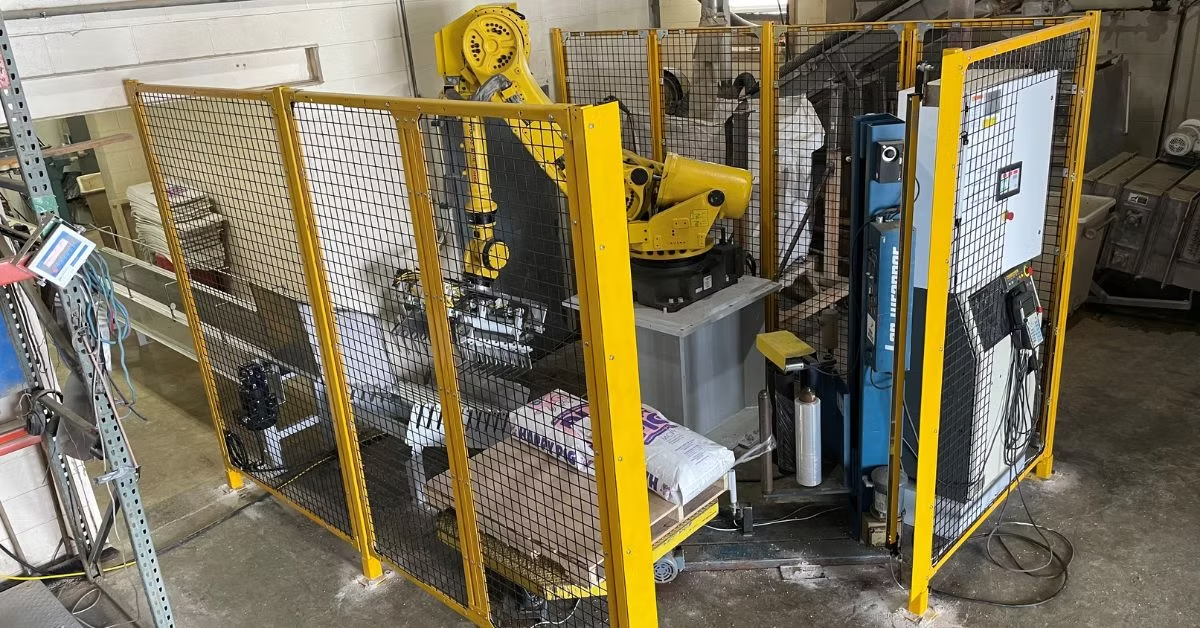
You can extend the lifespan of your automated palletizing system by performing regular maintenance inspections. Regular tasks should include lubricating moving parts, calibrating and cleaning the sensors, and inspecting any safety systems.
Operator training should cover system operation, basic troubleshooting, and safety procedures. Well-trained operators can identify potential problems early and perform routine maintenance tasks, reducing downtime and service costs.
You can keep track of your system’s capabilities to gauge performance metrics, identify possible trends, and get the most out of your operations. Most modern systems can provide diagnostic reports to help you and your team address issues before they result in downtime.
Make the Right Choice for Your Business Today
Automated palletizing represents a significant investment that can transform your packaging and shipping operations. This technology offers substantial benefits related to safety, consistency, and labor efficiency, but success depends on careful planning and proper system selection.
Jaeckels Industrial offers a wide range of robotic palletizing systems to help revolutionize your operations. We can create a custom system that works for the specific needs and volume of your facility. If you want to enhance your business today with automated systems, reach out to see what we have to offer.