
Whether you need custom parts for industrial equipment or you’re looking to upgrade your entire layout with automated systems, a metal fabricator can help. Who you choose to hire for the job impacts the quality, timeline, and costs that you can expect. Many businesses rush into this choice without asking the important questions to uncover a potential partner’s full capabilities or reliability.
While you can expect a fabricator to bring cutting and welding experience to your project, you want to make sure they understand the material properties, production scaling, and manufacturing processes of your specific business.
The wrong choice can result in delayed projects, quality issues, and unexpected expenses. It doesn’t mean the fabricator did a bad job, but maybe their skills and results don’t align with your company’s needs.
This is why Jaeckels Industrial is here to help with eight questions you should ask your metal fabricator. Collecting this data up front allows you to ensure compatibility and find someone who can work within your parameters and deliver the results you’re looking for.
1. What Types of Materials Do You Work With?
Different fabricators specialize in different materials, and this specialization affects both quality and pricing. Ask about their experience with the specific materials your project requires. Some fabricators excel with standard steel and aluminum but struggle with exotic alloys or high-strength materials.
Material expertise goes beyond just cutting and shaping. Experienced fabricators understand how different materials behave during welding, heat treatment, and finishing processes. They know which materials require special handling or storage conditions. This knowledge prevents costly mistakes and ensures your finished products meet performance requirements.
Consider asking a potential fabricator to show you examples of recent projects they’ve done that use similar materials. A fabricator that regularly works with your chosen material will have established processes and quality controls specific to that material’s characteristics.
2. What Fabrication Methods and Equipment Do You Use?
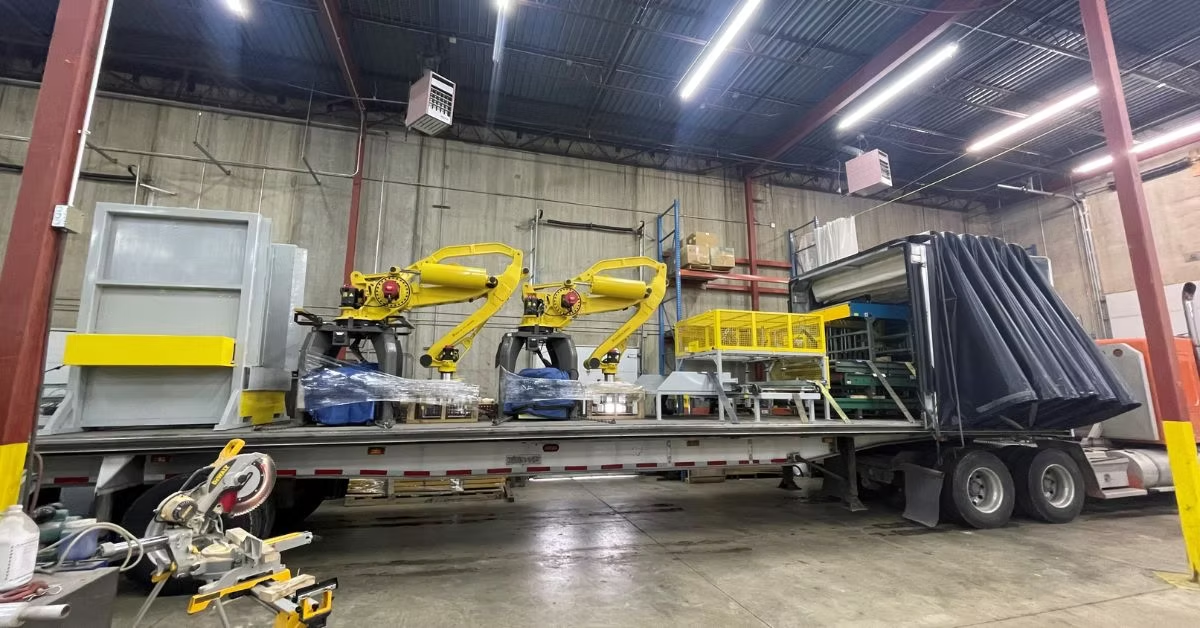
Modern metal fabrication relies heavily on automated systems and precision equipment. Ask about a potential partner’s specific capabilities, including CNC machines, laser cutting systems, and welding equipment. Automated systems provide better consistency and can handle complex geometries that manual processes cannot achieve.
You should also consider the age and condition of their equipment. Many newer machines can produce more precise results and consistently identical cuts. Pay special attention to the fabricator’s automation capabilities if your project involves high volumes or tight tolerances. Automated systems excel at repetitive tasks and can maintain consistent quality across large production runs. They also reduce labor costs, which can translate to better pricing for your projects.
3. What Quality Control Processes Do You Follow?
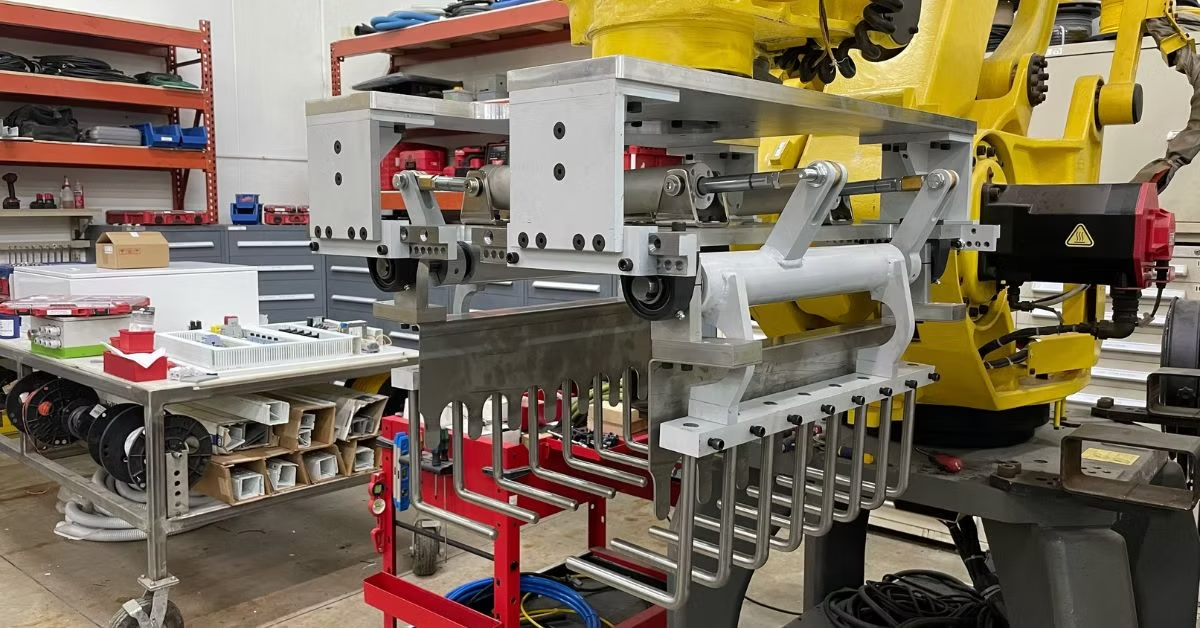
Quality control is one of the biggest things that separates professional fabricators from people who cut and weld metal on a more casual level. It’s a good idea to ask about a fabricator’s inspection procedures, measurement equipment, and quality documentation practices. Reliable fabricators have established quality control processes that they follow consistently for every project.
Check specifically for document review procedures, which reveal how thoroughly a company will examine your specifications before starting work. Fabricators that catch potential issues during the planning phase save more time and money than those that discover problems during production.
Try to get as much information as you can about each potential partner’s measurement and inspection capabilities. Coordinate measuring machines, precision gauges, and other inspection tools ensure that finished parts meet your dimensional requirements. Some fabricators can provide detailed inspection reports that document compliance with your specifications.
4. What Are Your Typical Lead Times?
Lead times affect your project scheduling and inventory planning. Experienced fabricators can provide realistic timeframes based on their current workload and your project’s complexity. They understand which factors might extend production time and communicate potential delays early in the process.
Rush capabilities matter for emergency repairs or unexpected demand spikes. Ask about a company’s ability to expedite projects when necessary and any associated costs. Some fabricators maintain capacity specifically for urgent requests, while others may not be able to accommodate rush orders.
It’s always a good idea to consider seasonal variations and how they can affect lead times. For example, some fabricators have busier schedules during the fall or winter holidays. Understanding these patterns and having a rough idea of a potential partner’s schedule can help you plan your own projects more effectively.
5. How Do You Handle Design Changes or Modifications?
Another question you should ask your metal fabricator is how they can handle modification requests or changes throughout the process. Well-organized companies have systems that track changes and prevent confusion about current specifications.
Cost implications for design changes vary significantly between fabricators. Some charge substantial fees for any modifications, while others accommodate minor changes without additional costs. Understanding their change policies prevents unexpected expenses later in your project.
Establishing this communication early on allows everyone to understand that modifications may happen and how they can impact project timeline and cost. Fabricators that document changes clearly and obtain written approval help prevent disputes and misunderstandings.
6. What Finishing Services Do You Provide?
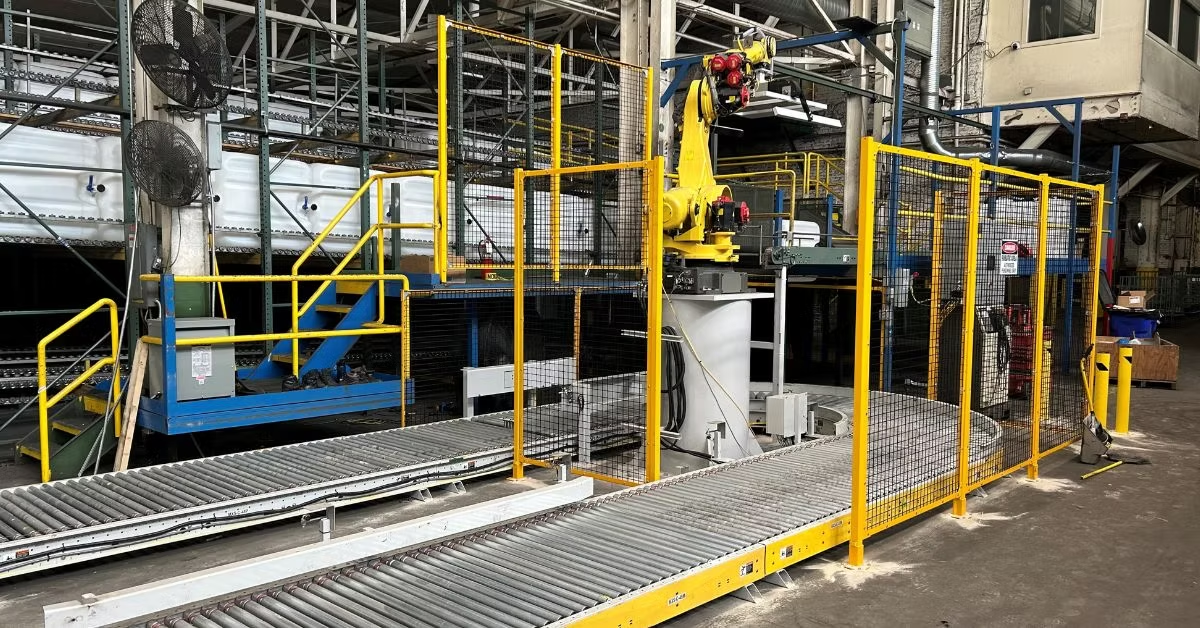
Surface finishing affects both the appearance and performance of metal components. Ask about a fabricator’s finishing capabilities, including painting, powder coating, plating, and surface treatments. Companies that provide finishing services in-house typically offer better coordination and faster turnaround times.
Quality standards for finishing vary between fabricators. Some provide basic finishes suitable for industrial applications, while others can achieve decorative finishes for visible components. Match their finishing capabilities to your application requirements.
If a quality fabricator doesn’t offer finishing services that align with your needs, it doesn’t mean you can’t work with them. Some companies will outsource projects specifically for finishing services, though that process may result in further wait times and needing to find quality finishers.
7. What Documentation Do You Provide?
Proper documentation supports quality control and traceability requirements. It’s always a good idea to learn as much as possible about a potential partner’s documentation practices, including inspection reports, material certifications, and process records.
Material traceability documentation, for instance, tracks the source and properties of materials used in your components. You may need this information readily available in the event of quality issues or if you need to verify material specifications for a client.
Likewise, process documentation records the manufacturing steps and quality checks performed during production. This information helps troubleshoot any issues and provides evidence that specified procedures were followed.
8. What Are Your Payment Terms and Pricing Structure?
Pricing structure affects your total project costs and cash flow requirements. Cost is an important factor, so there’s no harm in inquiring about standard payment terms and any additional fees like deposits or milestone payments. Some fabricators require substantial upfront payments, while others offer more flexible terms for established customers.
Keep in mind that additional costs beyond the base fabrication price can affect your budget. Ask about charges for rush orders, design changes, special materials, or additional services. Understanding the complete cost structure prevents budget surprises.
Partner with Jaeckels Industrial today to experience the expertise and reliability that set us apart from other industrial fabricators. Contact us now to discuss your needs, and let’s build a strong foundation for your next project together.