
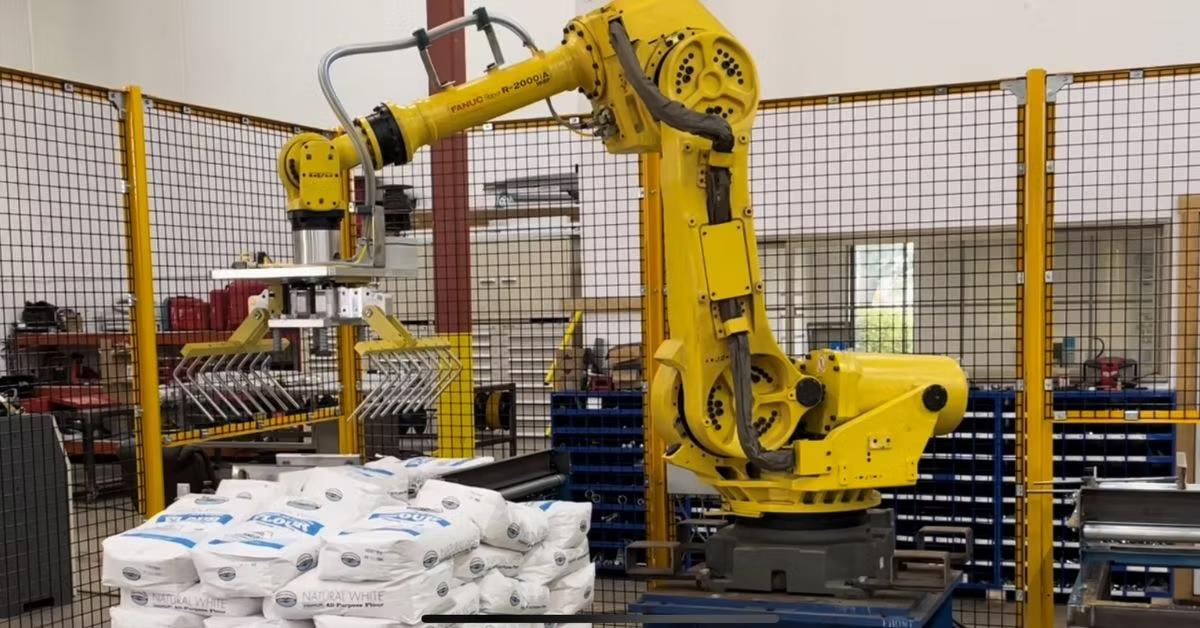
Automation is a rising trend in modern manufacturing and warehousing. A significant business investment is the idea of palletizing robots. These machines help streamline the stacking and arranging of goods, allowing organizations to improve efficiency and workforce allocation.
However, you must consider a few things before you buy palletizing robots, and Jaeckels Industrial is here to help. We will go over everything you must consider, how these robots can align with your business’s operational needs, and what you should evaluate before investing in a palletizing robot.
Assessing Your Throughput Requirements
The first thing to do before deciding whether palletizing robots are right for you is to analyze your throughput needs. Palletizing robots operate at different speeds, so you want to select a robot that aligns with your operational demands or else it can bottleneck your productivity.
Start by examining your current production volume, then account for anticipated growth in the coming years. Some robots work better in high-speed environments, while others emphasize precision. You want to pick an automation system that works within your requirements.
Try to pay attention to your peak operational times. Does your facility experience seasonal fluctuations in production? You can choose a robot or system that can handle these changes without compromising efficiency.
Evaluating Material Compatibility
Different goods have different handling requirements. You want to make sure your palletizing robots can handle the specific materials, shapes, and weights of your products. For example, you need a robot with gentler handling capabilities if you’re shipping fragile goods, such as glass jars. Otherwise, you’ll need a palletizing robot with average to more robust handling capabilities for sturdier and heavier items, such as concrete blocks.
It is important to factor in the packaging materials since certain types can present challenges during stacking, such as slippery plastics or odd-shaped boxes. Consider a robot with end effectors that work for the unique goods you ship and emphasize safety and efficiency during the palletizing process.
Understanding Robot Payload and Reach
Always consider the payload capacity and reach of the robot arm when figuring out the right system for your needs. Payload refers to how much weight the robot can lift, while reach defines the maximum distance it can extend to stack items on a pallet. These factors largely depend on your pallet dimensions, product weight, and stacking height.
For example, facilities with high stacking requirements may need robots capable of extended reach. Failing to select a robot with adequate reach or payload could lead to performance issues or, worse, mechanical damage over time. Making sure these parameters work for the physical demands of your payload can help you avoid a lot of issues down the road.
Palletizing Robots 101: What To Consider Before You Buy
Integration With Existing Systems
Another thing to consider before you buy palletizing robots is how well they can integrate with your current infrastructure. Automated systems often require seamless communication with your current conveyor belts, production lines, and warehouse management software. Failing to consider your current system can lead to inefficient mechanics and workflow disruptions.
You should also take the time to check that the software that controls your palletizing robot is compatible with your current systems. You must maintain compatibility between software and hardware to get the most out of your robotic investment. You can check compatibility by looking into APIs, middleware solutions, and custom configurations from the manufacturer.
Flexibility and Adaptability
Modern manufacturing environments constantly evolve, with plenty of new product types and processes entering the workplace. Choosing a highly flexible and adaptable palletizing robot can help your facility accommodate these changes without the need for significant additional investments.
You may consider robots that have modular or adjustable end effectors to easily switch between handling different products, giving them more versatility in the workplace. Similarly, robots with reprogrammable software allow you to refine or upgrade their tasks as your operational needs grow.
Safety Considerations
Always keep safety in mind when introducing automation into your facility. Palletizing robots move at high speeds and handle heavy loads, resulting in potential safety risks for people who aren’t careful. Try to consider safety features, such as collision detection systems, secure fencing, light curtains, and emergency stop buttons.
You can also check the compliance certifications and safety standards that connect to your specific robot. You can check the current safety regulations for industrial robotics in your area and make sure your system adheres to these standards. A bit of extra work and care can minimize liability issues and protect your employees.
Cost and ROI Analysis
Palletizing robots is a significant investment, and before you make a commitment, you should understand the initial and long-term costs. Beyond the purchase price of the robot itself, you may want to consider installation fees, training expenses, ongoing maintenance and potential firmware updates.
Once you gather all costs, conduct a return on investment (ROI) analysis to determine how long it will take to see financial benefits. Savings in labor costs, increased productivity, and reduction in workplace injuries often offset the initial expense. However, conducting a full cost-benefit analysis is still a good idea to gain a better understanding.
Palletizing Robots 101: What To Consider Before You Buy
Maintenance and Support
Regular maintenance is vital for keeping your palletizing robot operating at peak efficiency. Evaluate the maintenance requirements for the model you’re considering and ensure you have trained personnel available for routine upkeep.
You can also check the manufacturer’s level of support. Do they offer prompt responses for troubleshooting? Can they quickly supply spare parts when necessary? Maintaining a partnership with the manufacturer can provide ongoing assistance and minimize downtime to protect your investment long-term.
Operator Training
Introducing a palletizing robot into your facility requires that your workforce receive proper training. Operators must understand how to program, adjust, and maintain the robot, even with basic tasks. A poorly trained staff leads to inefficiencies and may even result in equipment damage or employee injury.
Check whether the manufacturer or supplier offers training programs as part of the installation process. You can teach everyone how the system works with training manuals, online resources, or even onsite demonstrations to ensure that everyone can safely operate the systems.
Investing Smarter, Not Harder
Palletizing robots is a growing trend for businesses looking to gain a competitive advantage by automating their operations. However, successfully integrating such an advanced tool requires more than just an off-the-shelf purchase. Managers should consider throughput, material compatibility, safety, and ROI to ensure that the robot they select meets their facility’s unique challenges and objectives.
Reach out to our expert team today to learn more about how Jaeckels Industrial can help you streamline your operations with palletizing robots. Discover how our solutions can help transform your workflow and maximize efficiency.
13 views